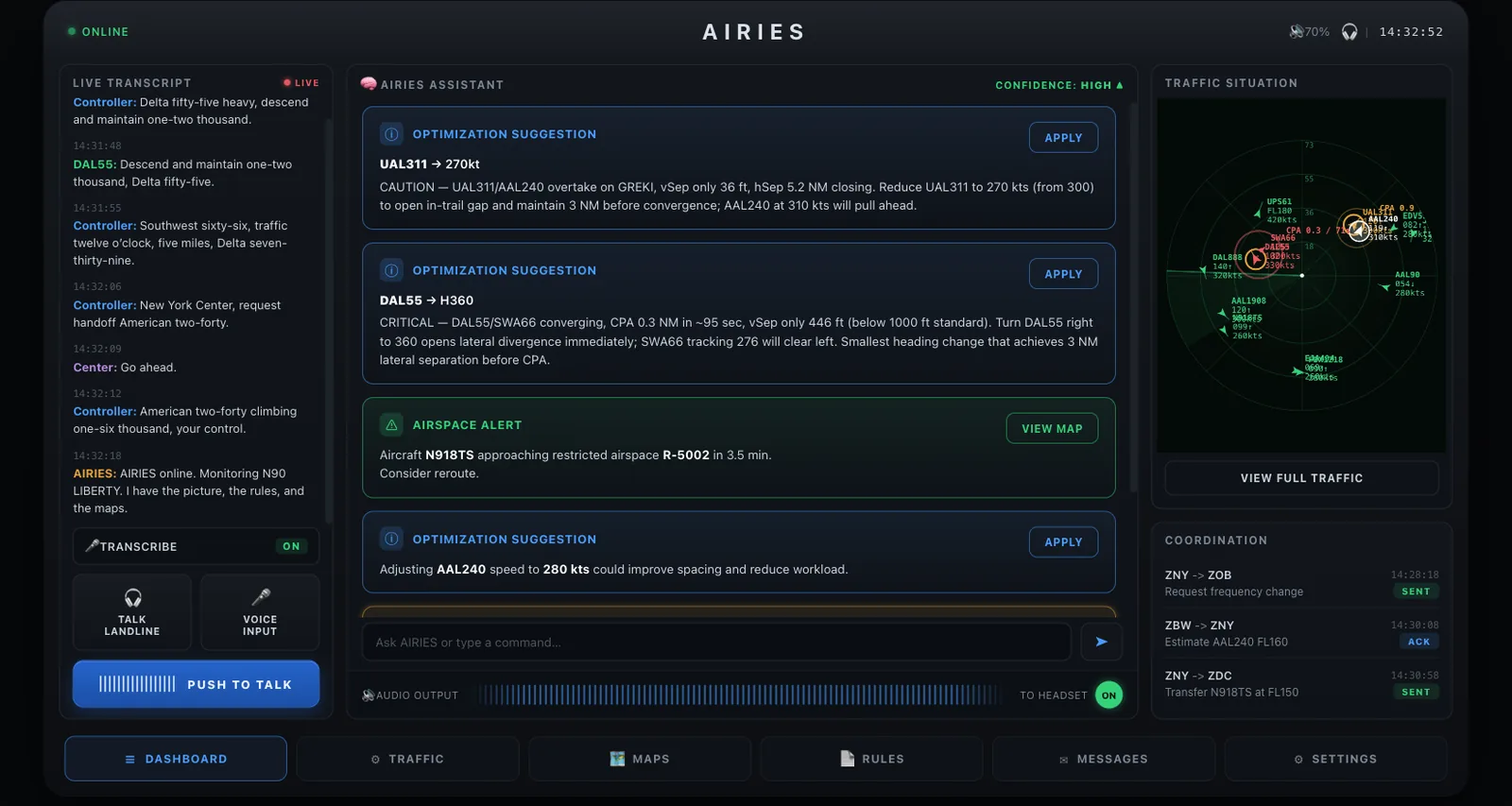
Airies is a second set of eyes for air traffic controllers, built around New York TRACON (N90). It watches the sector, flags conflicts and missed readbacks, and answers questions about the facility's rules. Audio, alerts and reasoning all run on one rule layer: N90's procedures turned into data an AI agent can query and cite.
Why it exists
A controller at a radar scope can be tracking 15 to 30 aircraft at once, alone. When a sector gets overloaded, a second controller, the B-side, picks up a headset and buys time. The team's README names the catch: facilities are understaffed, and there isn't always someone to pull off break.
Airies is built to be that B-side.
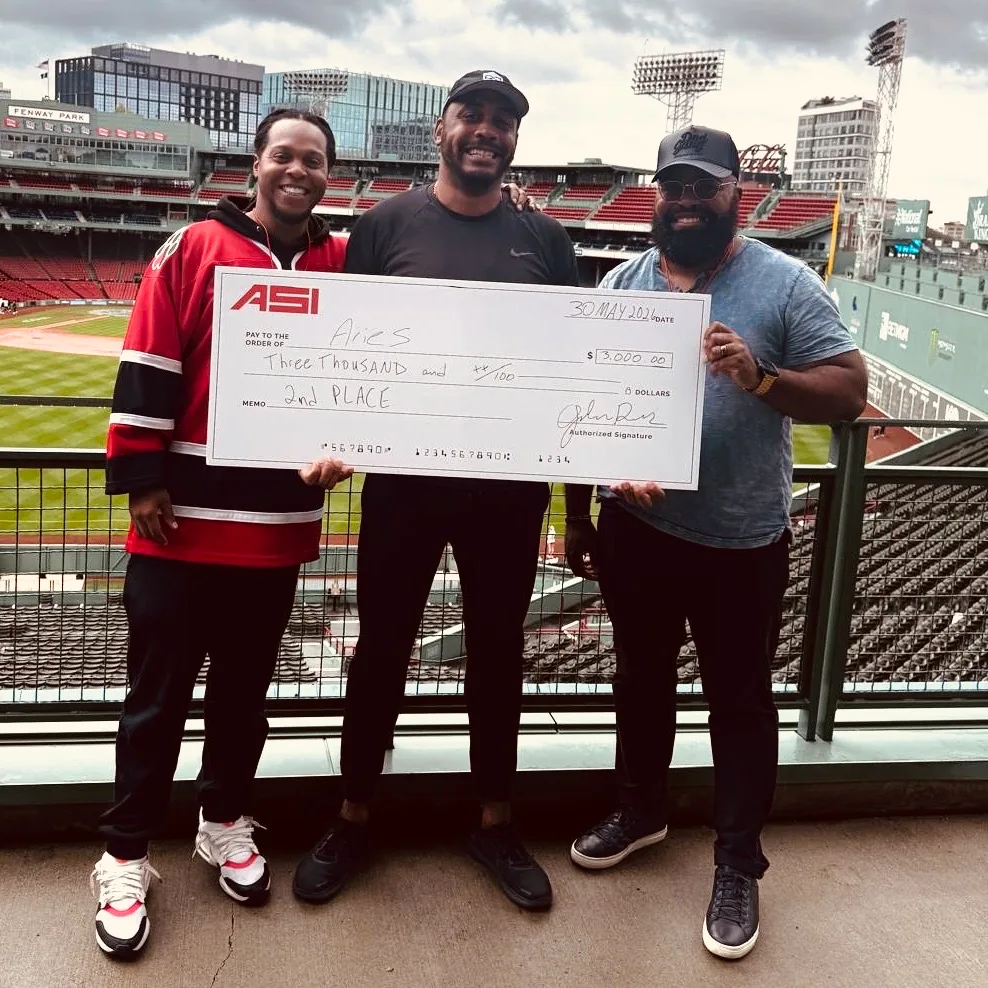
A team of three built it in five hours at Air Space Intelligence's Boston Tech Week hackathon, held at Fenway Park on May 30, 2026. Tony, a former air traffic controller, was the domain lead. Chris Turner ran the backend and agentic engineering. The third teammate, a company builder and fundraiser, focused on the host company and the story.
The rule layer
Tony set the build order ahead of the day: rules first, audio second, agents third. He built the rule layer for N90's Liberty area before the event.
The rule layer turns N90's standard operating procedures and Letters of Agreement into data. The Liberty area alone comes to 5 positions, 54 airspace volumes, 84 named fixes, 110 published routings and 14 conditional rules. The 16 Letters of Agreement were scanned images, so a Claude Code workflow read each one with vision and pulled out 287 procedures. Each rule and routing keeps its source paragraph number, so an agent can cite the rule behind an answer.
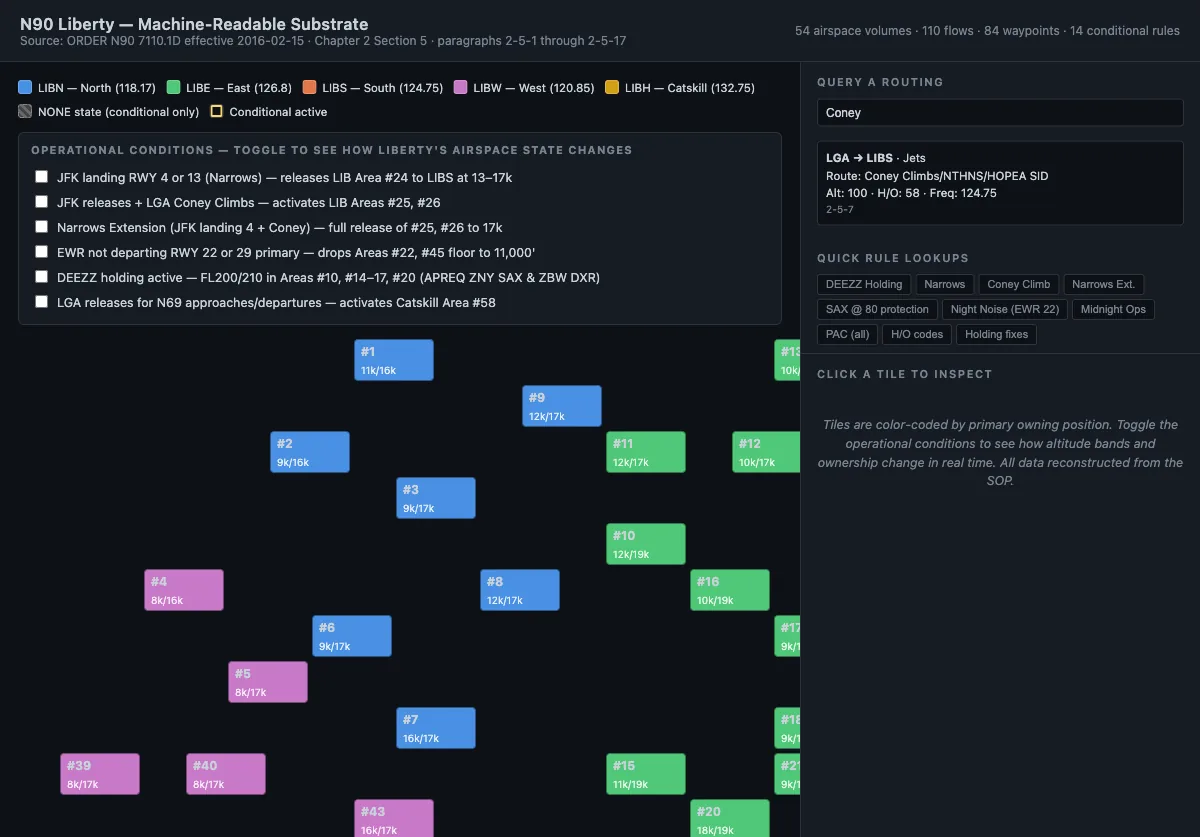
On the day, Tony added four more N90 areas, rebuilt from public documents.
How it works
Chris ran a build fleet. That morning, 34 Claude agents wrote the first codebase in parallel, then 8 checker agents patched 9 mismatches between their files.
The backend cuts LiveATC audio into 15-second chunks with ffmpeg, transcribes it with Whisper, and has Claude turn the transcripts into typed events. A Redis stream feeds three agents that watch for readback gaps, rule-based conflicts and controller load.
Tony built the console shown at the top of this page. It stands in for a physical B-side seat beside the controller's workstation. Simulated traffic flies published Liberty routes through the real fixes. A separation engine set at 3 nautical miles and 1,000 feet predicts each pair's closest approach and puts red halos on pairs headed for a conflict.
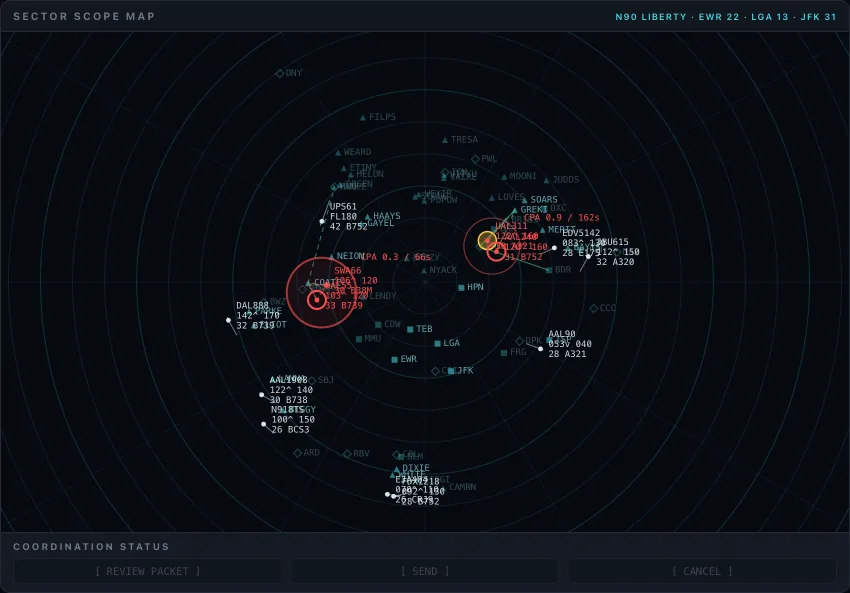
The agent is Claude, called straight from the browser, and its tools are the console's own functions. It proposes resolutions the controller can confirm or dismiss, answers rule questions from the data, and drafts coordination for the next facility.
The result
Airies took second place. It was the first hackathon for all three teammates, in a room full of ML engineers and data scientists.
Where it stands
Airies is a prototype. Chris kept building after the event. By June 3 the main branch had weather layers, a conflict training view, a Google sign-in with an email allowlist, and a switch that keeps the agents off when no demo is running. The main branch hasn't changed since. The code lives in Chris's private repository.