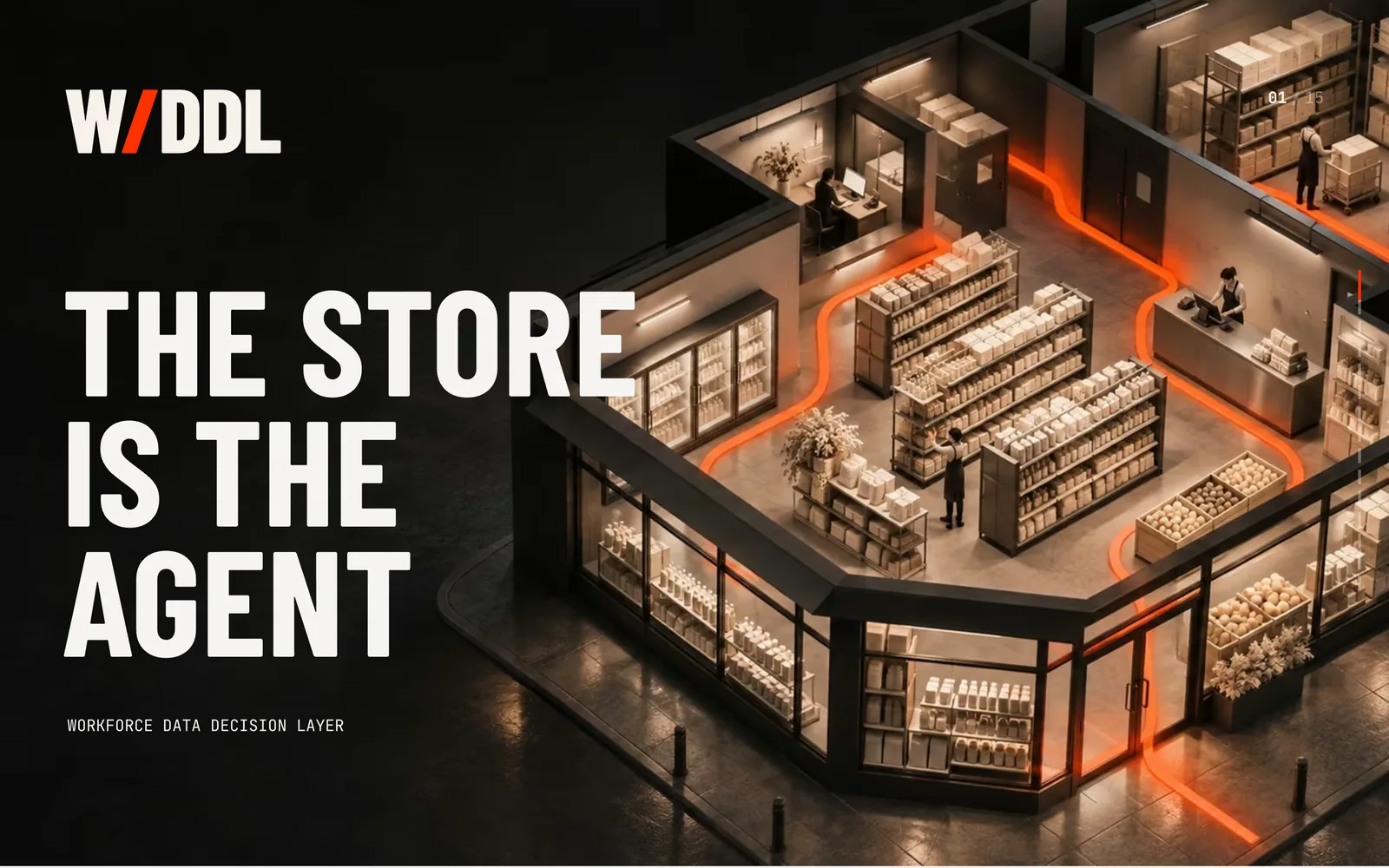
WDDL (Workforce Data Decision Layer) is an agentic retail operations platform for independent stores. Tony Blount is its co-founder and CEO. He started the codebase in November 2025, and the first production deploy went out on December 17, 2025. Marcus Johnson-Smith, a multi-store owner-operator, was WDDL's first customer before he joined as co-founder and CRO.
Why it exists
Larger chains have district managers, analysts and workforce software. An independent retailer has spreadsheets and the owner's evenings. The pitch deck lists what that looks like on the floor: schedules built in Excel and retyped into payroll, managers doing admin with less time to coach, and owners who find out after the money is gone. WDDL is built to fill that missing operations role in every store.
What it does
The agent opens the day. The Today screen shows sales so far, transactions, average basket and labor, then a list of what needs a manager: an associate whose revenue has dropped, a notice still waiting for acknowledgement, the tasks left open.
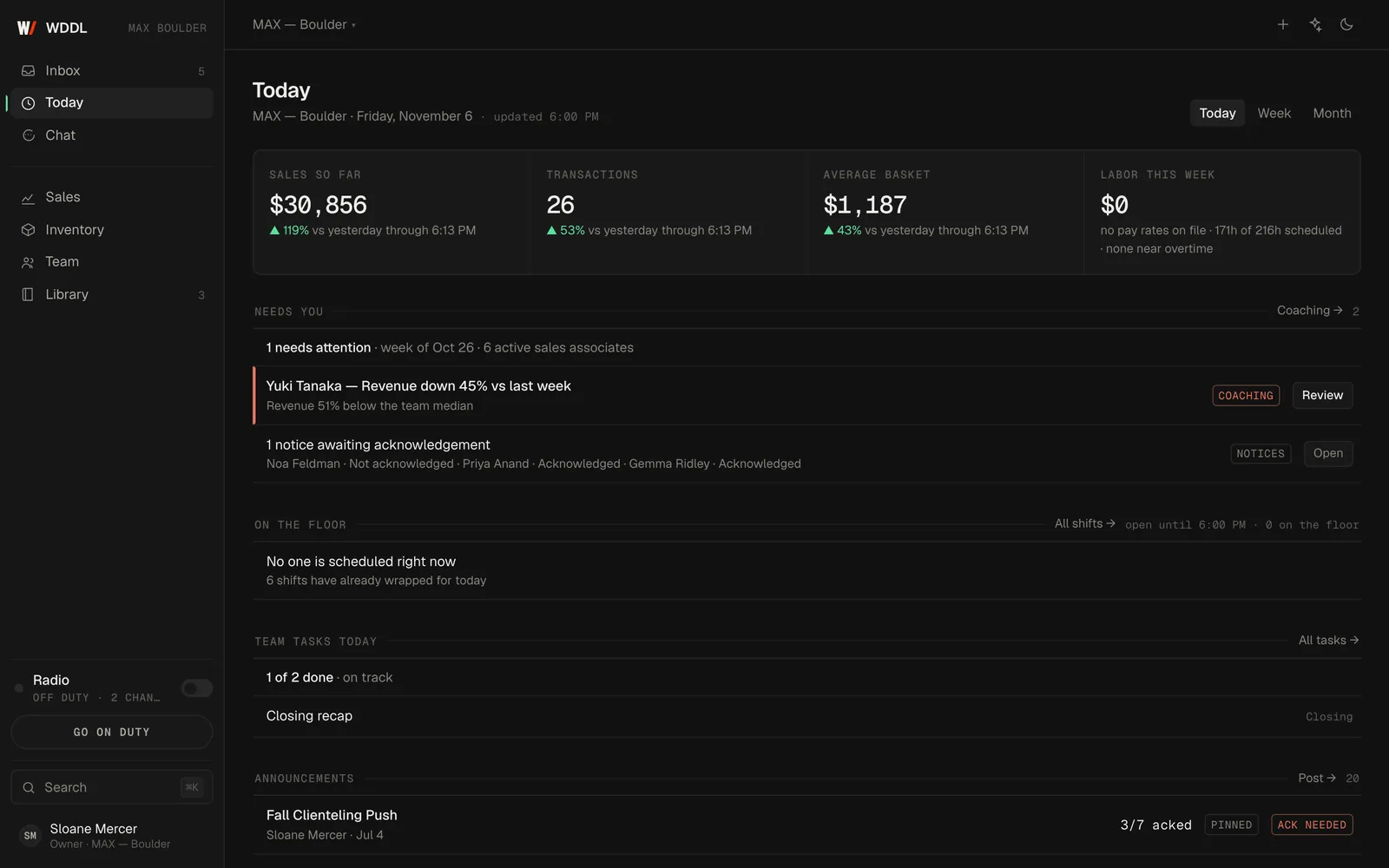
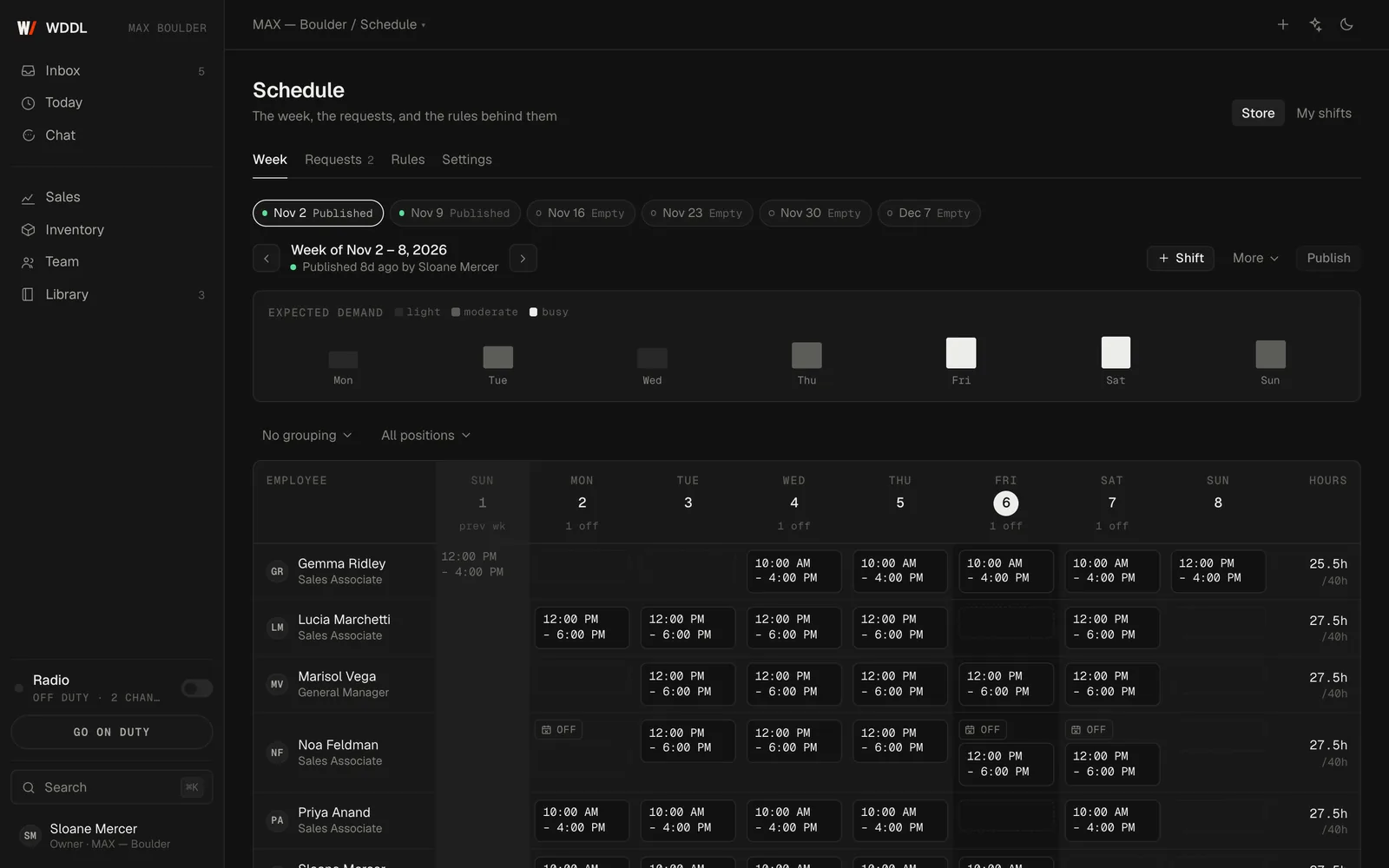
Around it sit the tools a store runs on: scheduling with expected demand and time-off requests, team chat and push-to-talk radio, tasks, announcements that staff acknowledge, training with quizzes, inventory, incident logs and recognition. An owner with several stores switches between them from one login.
How it works
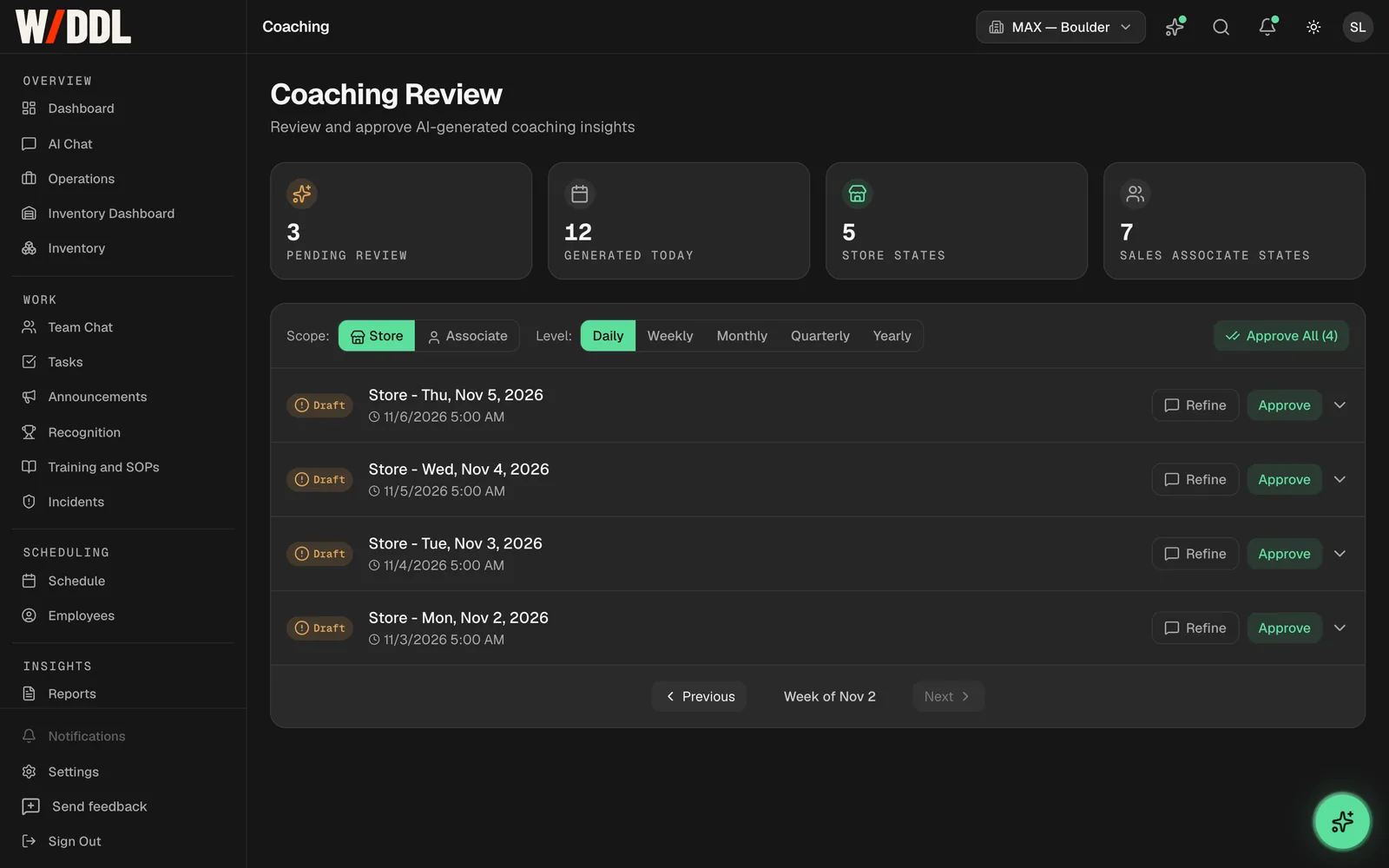
WDDL pulls each store's point-of-sale data at set times through the day. From it, the platform writes coaching at five levels, daily through yearly, for the store and for each sales associate. Drafts land in a review queue, where a manager refines or approves each one.
An AI chat, built on Anthropic's Claude, answers questions about the store's own numbers, such as which associate sold the most yesterday.
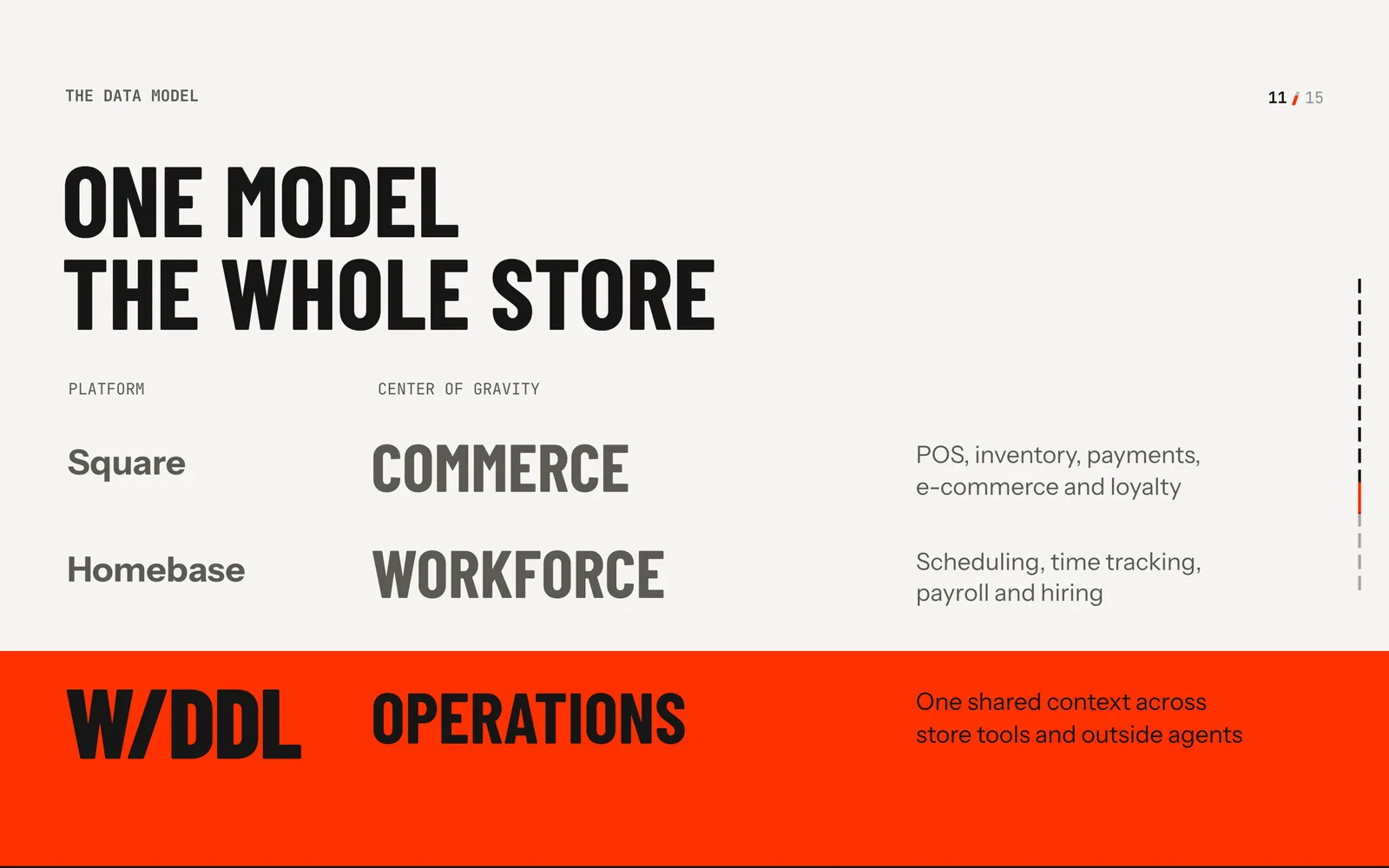
Under the screens sits one data model for the whole store. Each store is a tenant in Supabase Postgres, and row-level security keeps each person's reads inside the stores they belong to. The app is Next.js on Vercel, with Vercel cron jobs running the syncs and scheduled reports.
Where it stands
WDDL is live at wddl.app. The pitch deck reports an early paid beta, live and paid in two stores since July 1, 2026. The platform is built to deploy across verticals: a demo group of four fictional fashion boutiques runs on the same code, with labels for that trade. The plan is retail first, then other deskless businesses such as auto repair, restaurants, vet clinics and home services. Mobile apps for floor teams are next on the deck's list.